The President
An old man on a dying world, speaking the words no corporation will let its people hear.

The President is the elderly political leader of the Free Mars resistance, the underground movement fighting to liberate the Martian colonies from the grip of the Consolidated Energy Company (CEC) and its puppet government. Though he appears for only a brief stretch of the 1990 film, his presence anchors the political stakes of the story: he represents the organized, human face of a people who have been stripped of their water, their autonomy, and their voice.
He is not a warrior or a technician. His power is symbolic and moral—he speaks for a population that the CEC treats as expendable labor on a dying world. In a narrative that constantly blurs the line between implanted memory and lived reality, the President is one of the few figures whose existence is never called into question by the story's central mystery.
- Role
- Political leader of the Free Mars resistance
- Affiliation
- Free Mars
- Location
- Mars (Free Mars base)
- First appears
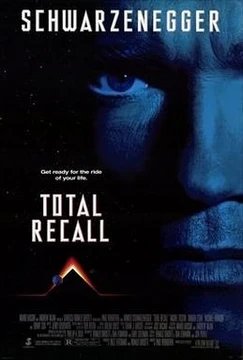
- Total Recall (1990 film)
- Status
- Alive at the film's conclusion
- Opposition
- CEC and the Martian government
Lore & Background
The Free Mars movement exists because the CEC has bled Mars dry. The planet's water is siphoned off, its people are kept in a state of perpetual scarcity, and any organized dissent is crushed by the CEC's security apparatus. The President sits at the head of the table where that resistance is planned—not as a general, but as a voice. His authority comes from the fact that he is simply *of* the people, an elder who has lived through the slow strangulation of his world and refuses to let the next generation accept it as natural.
In the film's structure, the President functions as the moral counterweight to the CEC's cold efficiency. Where the corporation speaks in logistics and profit margins, he speaks in terms of survival, dignity, and the simple right to exist on one's own soil. His base is cramped, utilitarian, and far from glamorous, but it is the one place on Mars where people gather as citizens rather than as workers.
The film's famous ambiguity—Douglas Quaid's inability to trust his own memories—never extends to the President. Whether or not Quaid's recollections of Mars are genuine, the Free Mars cause and the President's leadership are presented as the one fixed, verifiable truth in a world where everything else might be a Kamare implant. He is the anchor that says: some things are real, and they are worth fighting for.
In Their Own Story
The air in the base tasted of recycled dust and old coffee. The President sat at the far end of a scarred metal table, his hands folded, his eyes half-closed as though listening to a frequency only he could hear. Around him, a dozen faces watched the door. Not with hope, exactly. With the particular patience of people who have learned that hope is a luxury the CEC can tax.
A young woman set a data-slate in front of him. Supply routes. Water allocations. The usual arithmetic of survival. He read it without expression, then set it aside and looked at the room.
"They will say we are terrorists," he said, his voice low and unhurried, the way a man speaks to a child who has broken a plate. "They will say we are disrupting the energy grid. They will say what they always say."
He paused. The silence in the room was not empty. It was full of people who had stopped believing the words.
"Let them say it," he finished. "We will still be here. They will still be counting our water. And one of those two things will have to change."
No one cheered. They simply nodded, one by one, and went back to their work. That was enough. That had always been enough.
Reader's Guide
Name: The President Role in the story: The President is the political head of the Free Mars resistance, the group of Martian colonists waging a sustained campaign against the CEC's control of their world. He is not a combatant; his function is to provide the movement with a legitimate voice, a unifying figurehead who can articulate the colony's grievances and keep the resistance from fracturing into isolated cells of sabotage.
Key relationships: His most significant relationship is with the Free Mars collective itself—he is their representative, their elder, the person they turn to when a decision must carry the weight of the whole population. He is also, by extension, the political counterpart to the CEC's leadership; where the corporation rules through infrastructure and fear, he rules through consensus and moral authority. Douglas Quaid, whether as himself or as the implanted agent Quaid, is drawn into the orbit of this conflict, and the President's cause becomes the lens through which the film's central question—what is real?—is ultimately answered.
Notable scenes: The President appears in the Free Mars base, the cramped and utilitarian hideout where the resistance plans its operations. His scenes are brief but carry the film's thematic weight: he is the one character whose reality is never in doubt, the fixed point against which the film's memory-plot is measured. His dialogue, though sparse, frames the entire political conflict in terms the audience can feel rather than merely understand.
Real world or implanted memory: The President exists in the "real" world of the narrative. Unlike several other elements of the story that may be Kamare implants, the Free Mars resistance and its leadership are presented as verifiable, external facts. The President is the story's anchor to a world that is undeniably, materially real.
Did You Know?
- The President appears in the 1990 film directed by Paul Verhoeven, where the Free Mars resistance serves as the political heart of the story's Martian storyline.
- In a film built on the unreliability of memory, the President is one of the few characters whose existence is never questioned by the narrative, making him a narrative anchor for what is 'real.'
- The Free Mars base where the President operates is deliberately designed to look impoverished and utilitarian, reinforcing the theme of a population stripped of resources by the CEC.
- The character's role as a non-combatant political leader contrasts sharply with the film's action-heavy set pieces, grounding the spectacle in a specific political argument about colonial exploitation.
More in Characters
Elsewhere in the Total Recall universe
Spotted an error? Know more?
This is a living reference — every entry is fact-audited, and reader corrections feed straight into our audit queue. Suggest an edit · See this site's audit record