Ronald Shusett
The man who made you doubt your own memories before the film even started.

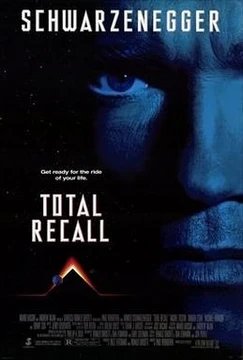
Ronald Shusett is the screenwriter whose vision helped forge the world of Total Recall (1990), the dystopian sci-fi film starring Arnold Schwarzenegger. In this unofficial fan encyclopedia, his entry is catalogued under Story & Timeline because his writing decisions—layered identity, corporate surveillance, the seductive promise of implanted memories—form the structural spine around which every scene in the franchise orbits.
Shusett did not work in isolation. The Total Recall screenplay was a collaborative effort, but his fingerprints are visible in the film's central conceit: a man who cannot trust his own mind, set against a future where memory itself is a commodity to be bought, sold, and weaponized. For fans who dissect the film's architecture, Shusett is the architect behind the maze.
- Role
- Screenwriter
- Primary credit
- Total Recall (1990) screenplay
- Co-writers on Total Recall
- Arnold Schwarzenegger, Brian Helgeland
- Other notable credit
- The Running Man (1982)
- Genre focus
- Dystopian science fiction / thriller
Lore & Background
Shusett's contribution to Total Recall is best understood through the lens of identity as narrative fuel. The screenplay he helped shape asks a deceptively simple question: what happens when the thing you believe about yourself is a product someone else manufactured? That question ripples outward into every relationship in the film—Quaid's marriage, his workplace, his friendship with his co-worker—because if any of it could be an implant, then no bond is safe. Shusett understood that the true horror of the story is not the laser or the Martian landscape; it is the quiet, creeping suspicion that the person across the dinner table might be a stranger wearing a familiar face.
His background in The Running Man (1982) is relevant context for fans. That film already explored a world where entertainment and survival are fused, where the state controls narrative and the individual is a character in someone else's story. Total Recall escalates that premise: instead of a state that broadcasts your suffering, it is a corporation that rewrites your past. The through-line in Shusett's work is the individual trapped inside a system that has decided what you are, and the violent, desperate act of refusing that decision.
For the fan community, Shusett's name is often invoked in discussions about the film's 'two timelines' problem—the famous ambiguity of whether Quaid's recollections are real or implanted. That ambiguity is not a flaw; it is the point. The screenplay is structured so that the audience, like Quaid, is forced to re-evaluate every prior scene after the twist. That structural gamble is a writing choice, and it is Shusett's most celebrated contribution to the Total Recall legacy.
In Their Own Story
The office smells like recycled air and cold coffee. Quaid sits at his station, the hum of the data-feed a low drone behind his eyes. Across the cubicle, his co-worker taps a pen against his lip, mouthing the words *'You should go. Take the vacation.'* Quaid nods. He has already made the call to Rekall. He has already chosen the package. But as he reaches for his badge to clock out, a flicker crosses his mind—something about a woman in a red dress, a hand on a steering wheel, a door closing. He can't place it. He can't even be sure it's his. The fluorescent lights buzz. The pen taps. And the world, for one more hour, lets him be exactly who he thinks he is.
Reader's Guide
Act One establishes Quaid as a man defined by routine: factory work, a tense marriage, a suppressed desire. Every detail is 'real' to the audience. The Rekall session is the inciting incident, but Shusett's structural trick is that it is also the first lie. The audience enters the Martian adventure believing they are watching the 'true' timeline, when in fact they are watching the implanted one.
Act Two is the adventure set-piece—Martian resistance, the villainous Ben, the rescue of Lori. The audience is fully invested in these characters and their stakes. This is deliberate: the more the audience bonds with the 'false' world, the more violent the recontextualization will be.
The mid-to-late twist is where Shusett's architecture pays off. The audience is told the Martian adventure was a memory implant. Every earlier scene—Quaid's marriage, his workplace, his co-worker—is suddenly suspect. The 'recall' conceit recontextualizes not just the plot but the audience's own emotional investment. They are no longer watching a story; they are auditing their own assumptions about which version was real.
The final act forces a choice: return to the 'real' world (the office, the marriage) or stay in the 'false' one (Mars, the resistance, the woman). Shusett leaves the door ajar. The audience is never fully told which timeline is canonical. That ambiguity is the screenplay's final act of trust in the viewer—and its most enduring legacy.
Did You Know?
- Ronald Shusett co-wrote The Running Man (1982) before Total Recall, establishing a pattern of dystopian worlds where the individual is trapped inside a system that controls their narrative.
- The Total Recall screenplay is famously structured so that the audience's emotional investment in Act Two is deliberately destabilized by the mid-film twist, a technique fans often compare to a narrative 'palindrome.'
- The film's central ambiguity—whether Quaid's memories are real or implanted—was a deliberate writing choice meant to make the audience question their own assumptions about which timeline is 'true.'
- Shusett's Total Recall co-writing credits include Arnold Schwarzenegger and Brian Helgeland, making the screenplay a three-way collaboration rather than a single-author work.
More in Story & Timeline
Elsewhere in the Total Recall universe
Spotted an error? Know more?
This is a living reference — every entry is fact-audited, and reader corrections feed straight into our audit queue. Suggest an edit · See this site's audit record