Philip K. Dick
The man who made you doubt your own memories before you ever walked into Rekall.

Philip K. Dick (1928–1982) was the American science-fiction author whose 1966 short story 'We Can Remember Anything You Like' served as the direct seed for the Total Recall franchise. While the films expanded his compact narrative into sprawling, action-driven blockbusters, the core philosophical question—can you trust the memories in your own head?—remains unmistakably his. For fans of the franchise, Dick is the invisible architect: the man who first asked whether a person's entire identity could be a product installed by a corporation.
His broader body of work, which constantly interrogates the boundaries between the real and the manufactured, the human and the synthetic, gives Total Recall its deeper resonance. The films lean into spectacle, but the story's emotional engine—that vertiginous doubt of 'Am I who I think I am?'—is pure Dick. Understanding his literary world transforms the franchise from a fun sci-fi action picture into a genuinely unsettling meditation on selfhood.
- Role
- Source-material author and philosophical inspiration
- Key work
- "We Can Remember Anything You Like" (1966 short story)
- Film adaptations
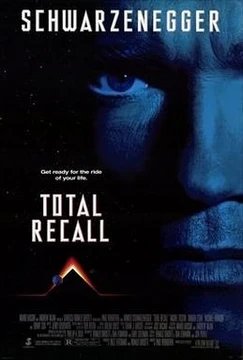
- Total Recall (1990, dir. Paul Verhoeven); Total Recall (2012, dir. Len Wiseman)
- Literary themes
- Reality vs. fabrication, corporate control of identity, perceptual uncertainty
- Notable other works
- Do Androids Dream of Electric Sheep?, The Man in the High Castle, Ubik
- Status
- Deceased (1982)
Lore & Background
Philip K. Dick wrote during a period when the Cold War, consumer capitalism, and early computing technology made the question 'What is real?' feel less philosophical and more urgent. His fiction repeatedly places ordinary people in situations where their senses, their memories, and their relationships turn out to be constructed or implanted. In 'We Can Remember Anything You Like,' a man walks into a memory-implantation clinic expecting a simple vacation fantasy and instead receives a life on Mars as a resistance fighter—complete with a wife, a mission, and enemies who want him dead. The story is deliberately ambiguous: the reader, like the protagonist, cannot be certain which layer is the 'real' one.
This structural trick—making the audience complicit in the character's confusion—became the backbone of both Total Recall films. Verhoeven's 1990 adaptation amplified the paranoia with a sprawling Mars setting, a corporate antagonist (Hauser Industries), and a twist that the protagonist may be a resistance operative who has been 'recalled' back to his 'real' life as a factory worker. The 2012 version reworked the gender dynamics and the corporate villain but preserved the same recursive doubt. In both, the audience is forced to re-evaluate every prior scene once the 'recall' is revealed.
Dick's influence extends beyond the plot mechanics. His prose often carries a quiet, almost tender sadness for characters who discover they are not who they believed themselves to be. That emotional undercurrent—grief for a self that may never have existed—is what separates Total Recall from a generic sci-fi action film and gives it a lingering, uneasy aftertaste that lingers long after the credits roll.
In Their Own Story
The fluorescent lights of the Rekall waiting room hum at a frequency that makes the fillings in Quaid's teeth ache. He watches the other customers—couples scrolling through memory packages on glossy tablets, a woman laughing as she previews a week in the Maldives—while his own hands tremble on the armrests. The receptionist calls his number. He stands, and the air in the corridor smells of ozone and something faintly sweet, like burnt sugar. A technician guides him to the chair, presses the cold node against his temple, and says, in a voice that might be kind or might be bored, 'You understand this is a simulation. You'll remember it as real, but it's a product.' Quaid nods. He doesn't think about what 'product' means. He doesn't think about it until the lights go out and the first thing he sees is red dust, and a woman's hand gripping his, and a voice saying, 'You're late. They're already here.'
Reader's Guide
The Total Recall narrative is built on a three-act structure of escalating doubt, and understanding where the audience's footing shifts is key to appreciating Dick's original conceit.
Act One establishes the 'normal' world: Quaid as a factory worker, a husband, a man with a modest life. He enters Rekall seeking a memory package. The audience accepts this framing because it mirrors our own consumer experience. The implant goes 'wrong'—or does it? The first shift occurs when Quaid wakes with a Mars memory and immediately faces armed pursuit. The audience is invited to assume the implant malfunctioned, that the 'real' world is the factory, the apartment, the wife.
Act Two deepens the confusion. Quaid encounters the resistance, learns of Hauser Industries, and begins to act as a freedom fighter. Every scene here is layered: is this the implanted memory playing out, or is this the true reality and the 'factory life' the fabrication? The audience cannot resolve this because the film deliberately withholds the anchor. Dick's original story leaned into this ambiguity; the films partially resolve it but leave the question open.
Act Three delivers the 'recall' reveal: the protagonist's identity is flipped. The audience must now re-examine every prior scene—the wife, the apartment, the factory—through the new lens. The 'recall' conceit recontextualizes not just the plot but the emotional relationships. Is the love real? Is the fear? The final beat asks the audience to sit with the discomfort of not knowing, which is exactly where Dick wanted them.
Did You Know?
- Philip K. Dick's short story 'We Can Remember Anything You Like' is only a few pages long, yet it contains the core premise of two major Hollywood blockbusters spanning over two decades.
- Dick's broader fiction—novels like 'Do Androids Dream of Electric Sheep?' and 'The Man in the High Castle'—shares Total Recall's central obsession: the possibility that an entire perceived reality is a manufactured const
- The 1990 film's director, Paul Verhoeven, expanded Dick's deliberately ambiguous short story into a fully realized action spectacle while preserving the story's fundamental question about the reliability of memory and id
- Dick himself was known for his own intense personal doubts about the nature of reality and his experiences, which many biographers and fans believe deeply informed the paranoid, identity-questioning themes throughout his
More in Story & Timeline
Elsewhere in the Total Recall universe
Spotted an error? Know more?
This is a living reference — every entry is fact-audited, and reader corrections feed straight into our audit queue. Suggest an edit · See this site's audit record