The Rekall Implant
Your dream vacation, hardwired into your skull.

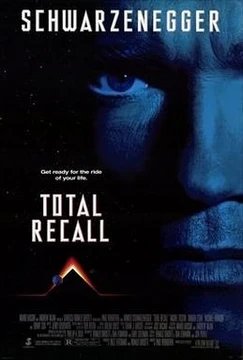
The Rekall Implant is the core technology behind the Rekall Corporation's memory vacation service—a controversial procedure that lets clients live out implanted memories of adventures and lives they never actually experienced. In the world of *Total Recall*, it's both a seductive escape hatch from a gray, oppressive reality and a narrative fuse that blurs the line between the real and the fabricated, ultimately detonating the question of what makes a person who they are. Its role is central: it doesn't just give Douglas Quaid a fake vacation—it cracks open his buried identity and sets him on a collision course with a totalitarian regime.
- Type
- Memory implantation technology
- Affiliation
- Rekall Corporation
- First appears
- Total Recall (1990)
- Purpose
- To provide artificial memory vacations
- Key feature
- Can implant false memories indistinguishable from real ones
Lore & Background
The Rekall Implant is a sophisticated neural device that writes artificial memories directly into a client's brain, creating a fully immersive experience of a fictional adventure. The process involves scanning the client's subconscious to build a personalized narrative, then injecting it as a seamless memory sequence. But the technology is a double-edged sword: it can accidentally unlock real suppressed memories, as seen when protagonist Douglas Quaid undergoes the procedure and discovers his true identity as a secret agent named Hauser. The Rekall Corporation markets the implant as a safe, legal alternative to actual travel—no luggage, no jet lag, just a few minutes under a machine and you're a secret agent on Mars. But the procedure's ability to rewrite perception of reality raises unsettling ethical questions. In the film, the implant is depicted as a sleek headset bristling with electrodes, while technicians watch brain activity on monitors like hawks. The technology's unreliability becomes a key plot point: Quaid's 'implanted' memories of Mars and a resistance movement turn out to be echoes of his real past, triggering a violent confrontation with the totalitarian regime of Vilos Cohaagen. The Rekall Implant thus serves as a metaphor for the power of memory and the fragility of identity. It challenges characters and viewers alike to consider what is real when memories can be fabricated, and whether a life built on false memories can still hold meaning. In the broader *Total Recall* universe, it represents the dangers of corporate control over personal consciousness—and the terrifying possibility that technology can both liberate and enslave.
In Their Own Story
Douglas Quaid sat in the sterile chair, the Rekall technician adjusting the neural interface with clinical precision. 'Just relax,' she said, 'and we'll give you the vacation of a lifetime.' He closed his eyes, and the world dissolved into a whirl of colors and sounds—a secret agent on Mars, a beautiful rebel, a fight against tyranny. But as the implant took hold, fragments of a real life bled through: a woman's face, a gunshot, a name—Hauser. The technician screamed as Quaid's eyes snapped open, his mind now a battlefield between the fake and the true. He knew then that the implant had done more than give him a dream; it had set him free—or damned him.
Reader's Guide
The Rekall Implant's arc begins with Douglas Quaid's visit to the Rekall Corporation, seeking a memory vacation to Mars. The procedure goes awry when the implant triggers a psychotic break, revealing that Quaid's real memories have been suppressed. This event sets off a chain reaction: Quaid is attacked by agents of Vilos Cohaagen, escapes, and meets a woman named Melina who claims he is actually Hauser, a former agent whose memory was wiped. From there, the implant becomes a ticking time bomb—every flash of 'fake' memory might be real, and every 'real' memory might be a lie, pushing Quaid toward a final confrontation where the truth of his identity is the only weapon that matters.
Did You Know?
- The Rekall Implant is based on the concept of 'memory vacation' from Philip K. Dick's short story 'We Can Remember It for You Wholesale.'
- In the film, the implant procedure is shown as a non-invasive process, but the novelization describes it as requiring a small surgical incision.
- The Rekall Corporation's slogan 'You can remember it for you wholesale' is a direct nod to the original story's title.
- The implant's failure in Quaid's case is hinted to be due to his real memories being too deeply suppressed, causing a conflict with the artificial ones.
The Rekall Service and Its Narrative Role
Rekall functions as a commercial memory-implantation company within the 2012 Total Recall, offering customers the chance to live out an imagined adventure through artificial memories. In the film, it is the site where the entire story ignites. Douglas Quaid, exhausted by his menial factory work building police robots alongside his friend Harry, walks into a Rekall office seeking the fantasy of becoming a secret agent. The technician assigned to his case, McClane, begins the standard exploratory preparations. What should have been a routine procedure quickly spirals when McClane discovers that Quaid already carries genuine memories of spy work — memories that cannot be the product of a Rekall implant. Before the situation can be resolved, a UFB police squad storms the facility, kills the Rekall staff, and attempts to take Quaid into custody. Quaid's body responds with combat instincts he never trained, and he eliminates the entire squad. The Rekall visit thus serves as the narrative's detonation point, the moment a manufactured fantasy collides with a buried, dangerous reality.
The World Rekall Serves
The 2012 Total Recall places its action at the close of the twenty-first century, a period in which chemical warfare has rendered most of the planet uninhabitable. Only two territories remain livable: the United Federation of Britain, encompassing the British Isles and northwestern Europe, and the Colony, which stretches across all of Australia. The gulf in quality of life between these two regions is so extreme that workers in the Colony must commute daily to the UFB to labor in its factories, traveling through a structure called The Fall — a gravity elevator that passes through the Earth's core. This stark inequality has given rise to the Resistance, a group the UFB labels terrorists but whose members simply want better conditions for Colony residents. It is precisely this world of drudgery and disparity that makes Rekall's promise of an escapist, implanted adventure so appealing to a factory worker like Quaid, who spends his days assembling police robots and dreaming of a life he has never lived.
The Rekall Incident and the Question of Identity
The Rekall procedure that begins as a simple fantasy purchase becomes the film's central identity crisis. When McClane, the technician played by John Cho, runs his diagnostic scans, he finds that Quaid's brain already contains authentic memories of covert operations — not the fabricated agent scenario he requested. This discovery shatters the clean line between implanted and genuine experience that Rekall's service is built upon. The UFB police raid that follows, in which the entire Rekall staff is killed, forces Quaid to act on instincts he cannot explain, and his subsequent return home reveals that his wife Lori is actually a UFB intelligence operative who has been monitoring him for only six weeks, not the seven years he believed. The Rekall visit thus exposes a layered manipulation: Quaid is really Carl Hauser, a former UFB operative captured and reprogrammed with false memories by Chancellor Cohaagen. The implantation service, meant to provide harmless escapism, becomes the accidental key that unlocks a buried, dangerous past and sets the entire plot in motion.
Production, Reception, and Place in the Total Recall Franchise
Len Wiseman was brought on as director more than a year later. The film was produced by Columbia Pictures in partnership with Neal H. Moritz and Toby Jaffe's Original Film. It is a reimagining of the 1990 film of the same name, which itself drew from Philip K. Dick's 1966 short story "We Can Remember It for You Wholesale." A notable departure from the earlier version is the setting: rather than Mars, the 2012 film takes place on a futuristic Earth divided between the UFB and the Colony.
Frequently Asked Questions
What is The Rekall Implant?
It is the proprietary memory-implantation procedure sold by the Rekall Corporation, letting a client live out a fully fabricated life—adventures, relationships, an entire identity—as though they had actually experienced it. In the 1990 film, it is the service Douglas Quaid signs up for before the session spirals into a life-or-death identity crisis.
How does The Rekall Implant differ from a real memory?
Once the implant is complete, the person experiencing it has no reliable way to distinguish the fabricated past from genuine lived experience. That indistinguishability is the narrative engine of the story, because Quaid can never confirm which parts of his history are authentic and which were programmed into him.
Who operates The Rekall Implant and for what purpose?
The Rekall Corporation markets the procedure as a commercial stress-relief and 'memory vacation' product aimed at ordinary citizens. In the film's wider context, the same underlying technology is also used by the Helios regime to implant false identities in its agents, which is what turns Quaid's routine session into a dangerous exposure.
What happens to Quaid after his Rekall Implant goes wrong?
The procedure malfunctions mid-session, leaving him with a fractured blend of implanted and real memories that sends him fleeing from Rekall security, the Martian resistance, and Helios operatives alike. His arc ends with him uncovering that he was originally a Helios operative (Haider/Quaid, depending on which memory layer proves 'real'), having been reprogrammed all along.
Why is The Rekall Implant important beyond being a plot device?
It forces both the characters and the audience to ask whether identity is built from genuine lived experience or whether a convincingly implanted past carries the same weight. The film uses it to argue that the self you construct—real or fabricated—is the self that matters, making the implant the thematic heart of the story rather than a mere sci-fi gadget.
More in Story & Timeline
Elsewhere in the Total Recall universe
Spotted an error? Know more?
This is a living reference — every entry is fact-audited, and reader corrections feed straight into our audit queue. Suggest an edit · See this site's audit record