Mars
Red dust, thin air, and a fight for freedom.

Mars in the *Total Recall* universe is a brutal, colonized frontier world where the United Nations of Earth (UNE) and the shadowy Recall Corporation rule with an iron grip. Once a beacon of human ambition, it has decayed into a dystopian mining colony where every breath is a struggle—the air is thin enough to starve your lungs, water is more precious than blood, and the populace huddles in domed cities or claustrophobic underground warrens. The planet's ruddy surface is gouged and scarred by relentless mining for turbinium, a mineral worth killing for, and the atmosphere is so hostile that citizens must wear oxygen masks or live in pressurized bubbles just to survive. Mars is the crucible for a war between corporate greed and the desperate dream of freedom, centered on a mysterious alien reactor that could terraform the entire world—or be buried forever.
- Role
- Colonized planet and primary setting
- Affiliation
- United Nations of Earth (UNE) and Recall Corporation
- First appears
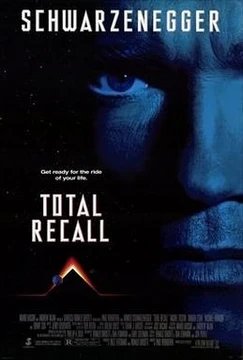
- Total Recall (1990 film)
- Status
- Under colonial rule, with a brewing rebellion
Lore & Background
Mars was colonized by Earth in the mid-21st century, driven by the discovery of valuable minerals that made the dangerous journey worthwhile. The planet's surface is a barren, rocky desert, with temperatures that drop to lethal lows and a sky that glows a perpetual rust-orange. The main colony, known as Mars Colony, is a sprawling, grimy city of domed structures, neon-lit streets, and cramped living quarters, where the working class toils in mines while the elite live in luxurious, pressurized habitats. The air is recycled, water is rationed, and every breath is a reminder of humanity's fragile hold on this alien world. Beneath the surface, ancient alien ruins hint at a forgotten civilization, including a massive reactor capable of generating an atmosphere—a secret that the Recall Corporation and the Martian resistance both seek to control.
In Their Own Story
The dust storm howled outside the dome, a constant reminder of Mars' hostility. Inside, a miner named Carl wiped the grime from his face, his oxygen mask fogging as he watched the newsfeed: another Recall protest crushed by UNE forces. He thought of his daughter, born on this red rock, who had never felt real sunlight. A flicker of hope crossed his mind—rumors of a hidden reactor, a machine that could change everything. But for now, he just tightened his grip on his pickaxe and returned to the tunnels, the weight of the planet pressing down on him.
Reader's Guide
Mars is the central setting of *Total Recall*, a colonized world that embodies both humanity's reach and its ruin. It is a mining colony dominated by the Recall Corporation, which controls the extraction of turbinium and other resources, while the UNE enforces brutal laws to keep order. The planet's harsh environment—lungs-stinging thin atmosphere, water rationed by the drop, and temperatures that can freeze you solid—forces inhabitants into domed cities or underground habitats, creating a stark chasm between the pampered elite and the bone-tired workers. The story pivots on the discovery of an ancient alien reactor buried beneath the surface, a device that could terraform Mars into a paradise, but the corporation will crush anyone who spreads the secret to maintain its stranglehold on power. Mars matters because it is the forge for the film's themes of identity, memory, and rebellion, where the protagonist, Douglas Quaid, must unearth his true past—and a conspiracy that could either save or doom the colony.
Did You Know?
- Mars' thin atmosphere requires all inhabitants to carry oxygen masks or live in pressurized domes, a constant reminder of the planet's inhospitality.
- The Martian resistance, led by figures like Kuato, operates from hidden underground bases, using the planet's tunnels to evade UNE surveillance.
- The alien reactor beneath Mars is capable of generating a breathable atmosphere, a secret that the Recall Corporation tries to suppress to maintain control over the colony.
- Mars' red dust is so fine that it seeps into every crevice, causing mechanical failures and health issues for the colonists.
A Sixteen-Year Gauntlet to the Screen
The path from Philip K. Dick's 1966 short story to a finished feature was anything but straightforward. Ronald Shusett acquired the rights to "We Can Remember It for You Wholesale" back in 1974 and began shaping a screenplay alongside Dan O'Bannon, but the project's sheer ambition proved a curse. For sixteen years it languished in development hell, cycling through seven different directors, accumulating forty separate script drafts, and seeing multiple actors attached to the lead role before anyone committed. In 1987, De Laurentiis Entertainment Group finally pushed the picture into early production, only to collapse under bankruptcy before cameras could roll. Arnold Schwarzenegger, who had long wanted the part but was repeatedly passed over as unsuitable, stepped in to persuade Carolco Pictures to purchase the rights and greenlight the film with him front and center. The resulting production carried an estimated budget of forty-eight to eighty million dollars, placing it among the costliest pictures of its era. Principal photography stretched across six months at the sprawling Estudios Churubusco studio complex in Mexico, where cast and crew endured a string of injuries and illnesses that made the shoot notoriously grueling.
Identity, Colony, and the Question of Reality
Set in the year 2084, the film constructs a Mars that is less a frontier than a prison. The planet's air and water are strangled by pollution, and its population—split between unmutated humans and those warped by radiation—lives under the iron grip of dictator Vilos Cohaagen, who hoards the valuable turbinium ore and controls every breath his subjects take. Into this world steps Douglas Quaid, a blue-collar construction worker on Earth who stumbles into Rekall, a company that sells implanted false memories. What begins as a purchased fantasy of Martian espionage spirals into a labyrinth of identity: is Quaid a genuine defector named Hauser, or is he a brainwashed operative planted by Cohaagen to infiltrate and destroy the Martian rebellion? The narrative deliberately withholds a definitive answer, layering revelations—Lori's true allegiance, Richter's relentless pursuit, Kuato's psychic reading of the alien reactor—so that the audience is never certain which layer of memory is authentic. This structural ambiguity has become the film's most discussed feature, inviting endless debate about whether the entire Martian sequence is genuine or merely a Rekall implant gone wrong.
Box Office Triumph and Critical Divisions
Total Recall arrived in theaters carrying enormous expectations and a production cost that made it one of the priciest films of its time. Those expectations were met at the box office: the picture collected roughly two hundred sixty-one million dollars worldwide, landing it as the fifth-highest-grossing release of 1990. Critical response, however, split along predictable lines. Reviewers consistently lauded the film's preoccupation with identity, memory, and the fragility of perceived reality, calling it thematically rich for an action picture. At the same time, a significant portion of the press took issue with what they characterized as gratuitous vulgarity and unrelenting violence, tempering their overall assessments. The practical special effects drew particular praise and earned the film an Academy Award, a rare distinction for a big-budget action feature. Jerry Goldsmith's orchestral score has since been singled out by critics and fans alike as one of the finest works of his long career. In retrospective evaluations, Total Recall has been elevated to a position among the best science fiction films ever produced and frequently cited as one of Arnold Schwarzenegger's most accomplished performances, a notable departure from his usual action-hero mold.
Echoes Beyond the Screen
The 1990 film left a footprint that extended well past its theatrical run. Its deliberately open ending—leaving viewers uncertain whether Quaid's Martian odyssey was real or a Rekall fantasy—has been dissected in academic and popular criticism alike, with analysts drawing connections to broader themes of authoritarian control, colonial exploitation of a colonized world, and the politics of who gets to define another person's identity. The property also spawned a 1999 television series, Total Recall 2070, which attempted to expand the franchise into episodic storytelling, alongside various comic book and video game adaptations. An early sequel concept rooted in Philip K. Dick's The Minority Report ultimately evolved into the standalone 2002 film Minority Report, preserving a thread of the original's DNA in a different narrative package. When a full remake bearing the same title appeared in 2012, it failed to recapture the cultural momentum or critical respect of the original, underscoring how the 1990 version's particular blend of practical spectacle, philosophical ambiguity, and Schwarzenegger's physical commitment had created something difficult to replicate.
Frequently Asked Questions
What is Mars like as a living environment in Total Recall?
In the 1990 film, Mars is a suffocatingly thin-atmosphere world where colonists struggle just to breathe and the rust-colored surface is pocked with enormous mining pits. Most residents are crammed into underground warrens or sealed dome cities, with the open surface reserved almost entirely for industrial extraction.
Who is in charge of Mars in the Total Recall universe?
The planet is jointly administered by the United Nations of Earth and the Recall Corporation, with the latter wielding enormous private power over resources, security, and information. Together they enforce a rigid colonial hierarchy that keeps the local population heavily monitored and politically powerless.
What is turbinium and why does it drive the plot?
Turbinium is the high-value mineral that Mars's entire colonial economy is built around, pulled from the planet's crust in massive open-pit operations. Control of its supply becomes the flashpoint for the film's central conflict, since both the UNE and Recall Corp will use lethal force to protect their share.
Why is water treated like a controlled commodity on Mars?
The Martian environment in the film is so arid and the atmosphere so thin that fresh water is genuinely scarce, making it one of the few resources the colonial government can ration to maintain leverage. This scarcity is deliberately exploited to keep colonists dependent on UNE infrastructure and too preoccupied with survival to organize.
What is the political state of Mars by the end of the movie?
By the final act, an open armed uprising has broken out, with colonists and a resistance faction clashing directly against UNE military forces and Recall Corp's private security apparatus. The planet is effectively in the middle of a colonial independence war, and the status quo is no longer holding.
More in World & Setting
Elsewhere in the Total Recall universe
Spotted an error? Know more?
This is a living reference — every entry is fact-audited, and reader corrections feed straight into our audit queue. Suggest an edit · See this site's audit record