Earth
A world where your only escape is a memory you didn't live.

Earth in the Total Recall universe is a dystopian, overpopulated planet in the late 21st century, ravaged by pollution, inequality, and authoritarian control. It serves as the grim, oppressive backdrop where the story begins, contrasting sharply with the promised paradise of Mars. The planet's dominant powers are the United Federation of Britain (UFB) and the Colony on Mars, with Earth itself divided into stark class-based zones, from the gleaming spires of the elite to the grimy, crowded underbelly of the working class.
- Type
- Dystopian Earth
- Government
- United Federation of Britain (UFB) rule
- Key Feature
- Massive overpopulation and pollution
- Role in Story
- Starting point and source of oppression
- Affiliation
- Humanity's homeworld, under UFB control
- First Appears
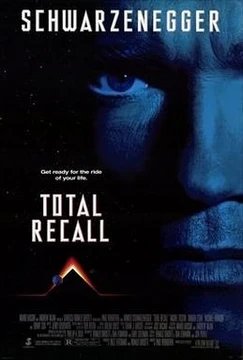
- Total Recall (1990 film)
Lore & Background
Earth in the Total Recall universe is a choked, gray planet, its skies perpetually hazy from industrial smog and its cities crammed with desperate masses. The United Federation of Britain (UFB) governs with an iron fist, maintaining order through surveillance, military force, and a rigid class system. The wealthy live in sterile, high-tech enclaves, while the poor endure squalid conditions in sprawling urban zones, where crime and rebellion simmer. Earth's resources are depleted, driving the UFB's exploitative colonization of Mars, where they mine a precious mineral called turbinium to sustain their power. The planet's role is central to the story's themes of escape and identity. Douglas Quaid, a construction worker in a dead-end life, is driven by a yearning for adventure, leading him to Rekall, a company that implants false memories of a Martian vacation. This choice spirals into a conspiracy that reveals Earth's hidden control over Mars and Quaid's own buried past as a rebel agent. Earth's oppressive reality makes the allure of Mars—a promised land of freedom and possibility—all the more potent, even as that promise is revealed to be a lie. Earth's landscape is a blend of retro-futuristic technology and decay, with flying cars, holographic advertisements, and robotic enforcers coexisting with grimy streets and crowded transit tubes. The planet's culture is defined by escapism, from Rekall's memory implants to the pervasive media that distracts from hardship. Yet, Earth also harbors resistance, with underground movements like the Martian colony's rebels fighting against UFB tyranny, hinting at a fragile hope for change.
In Their Own Story
The transit tube juddered as it snaked through the city's guts, a metal artery clogged with the weary. Douglas Quaid leaned his forehead against the cold, grimy window, the vibration rattling his teeth. Outside, the sky was a permanent bruise of orange-gray, the sun a rumor swallowed by smog. Holographic ads flickered on every surface—a perfect Mars, red and inviting, promising freedom for a few credits. Quaid watched a woman on the platform below adjust her breathing mask, the plastic fogging with each exhale. He thought of his wife Lori, her perfect smile, their perfect apartment, the perfect lie he was starting to choke on. 'Tonight,' he whispered to his own reflection. 'Tonight, I'll be someone else.'
Reader's Guide
Earth is the starting location and primary setting for the first act of Total Recall, establishing the oppressive reality that drives the protagonist's journey. It is a dystopian world under the United Federation of Britain (UFB), characterized by overpopulation, pollution, and strict social stratification. The planet's role is to contrast with the idealized Mars, highlighting themes of escape, identity, and rebellion. Key locations include Quaid's apartment, his construction job site, and the Rekall facility, where the plot's central conflict is triggered. Earth matters because it grounds the story in a recognizable, if exaggerated, future, making the stakes personal and the protagonist's desire for change relatable. It also serves as the seat of UFB power, with Governor Cohaagen's regime using Earth's resources to control Mars, setting up the rebellion that Quaid ultimately joins. For fans, Earth is a gritty, lived-in world that feels both futuristic and decayed, a perfect foil to the Martian colony's harsh but hopeful frontier.
Did You Know?
- The film's Earth design was heavily influenced by the cyberpunk aesthetic, with crowded urban environments and oppressive architecture.
- The United Federation of Britain (UFB) is the dominant political entity on Earth, ruling with a militaristic and corporate agenda.
- Pollution on Earth is so severe that citizens often wear breathing masks in public areas, a detail seen in background extras—a quiet, constant reminder that even the air is owned.
- The Rekall corporation, which implants false memories, is a key Earth-based business, exploiting people's desire to escape their harsh reality; its tagline, 'They can take away your life, but they can't take away your me
World & Story
Total Recall 2070 is set in a grim, densely populated industrial metropolis where a unified Interplanetary Council governs Earth, Mars, and orbital stations. Yet true authority rests with the Consortium, a coalition of at least six multinational corporations that bankrolled Mars colonization. Among them are Rekall, an information-technology giant that also supplies operating systems for androids; Uber Braun, a robotics and rocketry firm; Minacon, an energy supplier; Tashimo-Pacific, a transport company; Variable Dynamics, a biotech firm pursuing synthetic humans; and Tillman Heath, an agriculture and chemicals conglomerate whose deeper agenda was never revealed in the single season produced. The narrative centers on David Hume, a senior detective at the Citizens Protection Bureau, whose partner is murdered by self-aware androids. He is then forced to work alongside Ian Farve, a polite, formal officer who is secretly an Alpha-class prototype android built on synthetic cloning technology. Their investigation collides with the Assessor's Office, the investigative body with exclusive jurisdiction over Consortium-related crimes, and with corporate private security. Major arcs include the Consortium's hidden agendas, Farve's true origins, Hume's wife Olivia discovering implanted false memories, and the enigmatic manufacturer of Alpha-class units. A particularly intriguing thread suggested that memory expansion in self-aware androids involved non-human DNA, and that a substance discovered at a remote Martian base could fuse human and android genetic material.
Influences & Creative Vision
The series bears the name of the 1990 film Total Recall, which itself drew loosely from Philip K. Dick's short story "We Can Remember It for You Wholesale." However, creator Art Monterastelli has acknowledged that the show shares virtually no major plot points or characters with that film beyond the Rekall company name and the idea of virtual-reality vacations. The far more significant creative touchstone was the 1982 film Blade Runner, a loose adaptation of Dick's novel Do Androids Dream of Electric Sheep?. Monterastelli explained that he believed crafting a paranoid psychological thriller with a strong visual identity reminiscent of Blade Runner would make better use of a limited budget, open more creative doors for the writing team, and align more faithfully with the spirit of Dick's antihero narratives than the action-oriented Total Recall movie would have. Despite the depth of Dick's influence on the production's tone and themes, he is not credited in either the opening or closing titles of the series.
Production & Visual Craft
Total Recall 2070 was a Canadian-German co-production created by Art Monterastelli, with principal photography taking place in Toronto, Ontario. The bulk of shooting occurred at the Downsview Park studio, situated on the grounds of a former Canadian Forces Base in the city's north. The show's signature futuristic cityscape was the work of John Gajdecki and his company Gajdecki Visual Effects, who blended computer-generated imagery with a live-action soundstage environment. For the production, two or three full levels of an entire futuristic setting were physically constructed and then integrated with CGI to create the dense, industrial, cosmopolitan backdrop that defines the series' noir aesthetic. The show ran for a single season of 22 episodes before being cancelled, leaving several major narrative threads, including the Consortium's full agenda, Farve's origins, and the Martian hybrid-DNA subplot, permanently unresolved.
Distribution & Legacy
The series first aired in 1999 on Canadian channel CHCH-TV and later that same year on American cable network Showtime. For syndicated U.S. broadcast, the episodes were edited to strip out scenes of nudity, violence, and in most cases strong language. Home-video availability has been patchy: in 1999 the complete series appeared on DVD in Japan, available in English and dubbed in Japanese.
More in World & Setting
Elsewhere in the Total Recall universe
Spotted an error? Know more?
This is a living reference — every entry is fact-audited, and reader corrections feed straight into our audit queue. Suggest an edit · See this site's audit record