Rekall
Your dream is our implant; your memory is our weapon.

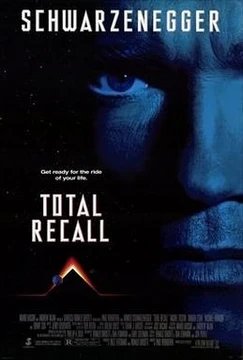
Rekall is the seemingly innocuous memory-implant corporation at the heart of the 1990 science-fiction film *Total Recall*. Its glossy advertising promises Earth's overpopulated citizens a 'dream vacation'—a surgically implanted memory of an experience they could never actually have, from skydiving over the Grand Canyon to a romantic weekend on the forbidden planet of Mars. In the film's opening, Rekall is presented as a consumer service, a place where ordinary people like Douglas Quaid can buy a fantasy and walk out feeling they've lived it.
Beneath that cheerful facade, however, Rekall is the operational engine of a clandestine political coup. The company's true mission is to manufacture a revolution on Mars, erasing the memories of resistance fighters, reprogramming them as 'new' agents, and using the chaos of a staged uprising to overthrow the Martian colonial government. Every implant, every 'dream,' every smiling receptionist is part of a machine designed to rewrite reality itself—and the line between a purchased memory and a stolen life becomes the film's central philosophical wound.
- Type
- Memory-implant corporation (public) / covert political operation (secret)
- Public service
- Implanted 'dream vacation' experiences for Earth's citizens
- Secret objective
- Staging a revolution to overthrow the Martian colonial government
- Notable employee
- Lori (Quaid's wife, a Rekall operative)
- Setting
- Earth, a near-future overpopulated world where Mars travel is banned
- First appears
- Total Recall (1990, dir. Paul Verhoeven)
- Source material
- Adapted from Philip K. Dick's 1966 short story 'We Can Remember It for You Wholesale'
Lore & Background
In the world of *Total Recall*, Earth is a choking, overcrowded hellscape of smog, vertical slums, and constant propaganda, while Mars—once a thriving colony—has been sealed off by a rigid colonial administration. Its citizens are forbidden from visiting, and any hint of dissent is crushed. Rekall positions itself as the antidote to this grey existence: for a fee, you sit in a reclining chair, a technician threads a thin filament into your brainstem, and you walk away with a vivid, sensory-rich memory of a Martian sunset, a Mars bar fight, a Martian love affair. The experience is indistinguishable from a real one. That is the product. That is the lie.
The film peels back the corporate veneer to reveal that Rekall is not a business at all but a military-political instrument. Its 'implants' are not vacations but erasures and rewrites. Resistance fighters on Mars are captured, their true memories stripped away, and re-implanted with fabricated identities so they will unknowingly carry out the coup that Rekall's handlers have orchestrated. The company's reception area, its cheerful jingles, its 'customer satisfaction' forms—all of it is camouflage for an operation that treats human consciousness as editable software. The most devastating implication lands on the protagonist himself: the 'dream' he experienced in the chair may not be a dream at all. It may be his real past, the life of a Martian freedom fighter, overwritten by a corporate identity he was told he had always held.
Rekall thus embodies the film's deepest anxiety: that in a world where memory can be manufactured, sold, and revoked, the self has no ontological anchor. There is no 'you' beneath the implant. There is only the last person who wrote the file. The company does not sell experiences; it sells the power to decide who you are—and who you were.
In Their Own Story
The fluorescent panels in the Rekall lobby hum at a frequency that makes your molars ache. You sign the waiver—fourteen pages of fine print you don't read, a standard clause about 'permanence of neural architecture'—and the receptionist, a woman with a smile calibrated to exactly 3.2 centimetres of lip lift, guides you to Chair 7. The leather is warm. The filament enters the base of your skull with a soft, wet click, like a pen uncapping. You close your eyes, and suddenly you are standing on red dunes, the sky a bruised violet, and you are laughing, and you are holding someone's hand, and the memory is so total, so *yours*, that when you open your eyes and the lobby is back, you cannot tell which version of you is the original. The receptionist is already printing your receipt. 'Enjoy your stay,' she says, and means it, and that is the worst part.
Reader's Guide
Rekall's public-facing goal is simple and seductive: sell Earth's trapped, overpopulated citizens a sensory escape they can never physically take. Their private goal is the opposite of escape—it is conquest. The company engineers a full-scale revolution on Mars by erasing the identities of resistance fighters, re-implanting them as unwitting operatives, and triggering a staged uprising that will topple the colonial government. Every 'dream vacation' sold in the lobby is a cover transaction that funds and conceals the real work happening in sterile back rooms.
Leadership is deliberately diffuse in the film. There is no single visible CEO; authority is distributed among technicians, handlers, and operatives like Lori, who wears the dual mask of loving wife and corporate agent. This structure mirrors the film's argument that control is most effective when it is institutional, bureaucratic, and therefore invisible. No one is 'the villain' in a corner office; the villain is the process.
Rekall's relationship to the protagonist is parasitic and recursive. Quaid walks in as a customer and walks out as a weapon. His 'wife' is his handler. His 'dream' is his erased history. The company does not oppose him; it *authored* him. This is what makes the political tension in the film so sharp: freedom is not the absence of a guard at the door. Freedom is the question of whether the door, the room, and the person standing in it were all fabricated by the same entity.
Philosophically, Rekall is the film's embodiment of the question: if your memories can be written by a corporation, do you own your identity? The answer the film offers is uncomfortable—ownership of the self is not a natural right but a continuous act of resistance against every system that would edit you.
Did You Know?
- Rekall's core concept traces back to Philip K. Dick's 1966 short story 'We Can Remember It for You Wholesale,' in which a man buys a memory of a vacation to a place he never visited—and the story's final line implies the
- In the 1990 film, the line between Quaid's 'implanted dream' and his actual history is deliberately left ambiguous, a narrative choice that mirrors the story's central philosophical question about the nature of selfhood.
- The film's Mars is depicted as a lush, green, almost Earth-like world, a deliberate visual contrast to Earth's smog-choked vertical slums—a design choice that underscores how the colonial government has turned a paradise
- Rekall's office is designed to feel aggressively normal and corporate—beige walls, potted plants, a waiting area with magazines—making the revelation of its true purpose hit harder because it looks like any other consume
More in Factions & Groups
Elsewhere in the Total Recall universe
Spotted an error? Know more?
This is a living reference — every entry is fact-audited, and reader corrections feed straight into our audit queue. Suggest an edit · See this site's audit record