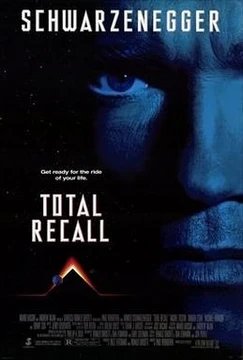
The Mars War
A colony in chains, a people in arms, and a corporation that will not blink.

The Mars War is the ongoing colonial conflict depicted in Paul Verhoeven's 1990 science-fiction film Total Recall. Set in a future where the Hellicon Corporation holds dominion over humanity's Martian settlement, the war pits a grassroots resistance of colonists against the corporate regime that governs their world. It is not a single battle but a sustained, simmering struggle for autonomy that forms the political backdrop against which the film's central mystery unfolds.
For fans, the Mars War is what gives Total Recall its stakes beyond a personal identity thriller. Every bar brawl, sabotage job, and Hellicon security sweep on Mars is a thread in a larger tapestry of oppression and defiance, and the audience is left to wonder how long the conflict has raged and what it truly cost the colonists to fight back.
- Conflict
- Martian colonist resistance vs. Hellicon Corporation
- Setting
- Mars colony (future era)
- Depicted in
- Total Recall (1990, dir. Paul Verhoeven)
- Nature
- Colonial rebellion / corporate suppression
- Key operative
- Douglas Quaid (resistance identity)
- Status at film's end
- Ongoing; resistance persists
Lore & Background
In the world of Total Recall, Mars is not a sovereign nation but a corporate fiefdom. Hellicon, the megacorporation that funded and built the colony, wields near-total authority over its inhabitants. The colonists—miners, technicians, families who emigrated to escape Earth's overcrowding—find themselves subject to Hellicon's security apparatus, its economic leverage, and its political silencing. The Mars War is their answer: a decentralized, often desperate resistance that operates from back-alley bars, hidden bunkers, and the narrow tunnels beneath the colony's surface.
The film never presents the war as a neat, declared conflict with uniformed armies. Instead, it is shown as a guerrilla struggle—improvised, personal, and violent. Quaid, whether by implanted memory or by his true self, moves through this world as a resistance operative who knows the tunnels, the safe houses, and the faces of the people fighting Hellicon. The war is intimate: a woman's face in a crowd, a gunshot in a corridor, a poster torn from a wall. It is a war of survival as much as ideology.
What makes the Mars War resonate with audiences is its ambiguity. Is Quaid a genuine Martian who lost his memories on Earth, or is he a factory-produced agent whose 'rebellion' is a scripted loop? The film deliberately withholds a clean answer, and the war itself becomes a mirror for that uncertainty. The colonists are fighting for something real, but the audience is never fully sure which side of the memory line they are watching from. That layered uncertainty is a hallmark of the Total Recall universe and what keeps the Mars War from being a simple good-versus-evil narrative.
In Their Own Story
The air in the lower-level bar tasted of recycled oxygen and cheap stimulant smoke. Quaid—Douglas, he told himself, though the name still felt like a coat pulled on over someone else's shoulders—leaned against the counter and watched the colonists argue in low voices. A Hellicon security officer stood by the door, arms crossed, his visor reflecting the neon of the establishment's sign. No one looked at him. No one ever looked at him directly. They looked through him, the way you look through a window at a storm you cannot stop.
A woman slid a glass of something amber across the bar. She did not sit. She set down a folded scrap of paper—coordinates, maybe, or a name—and said, 'The tunnels are open tonight. You remember the way.' Her eyes held a question he could not answer, because he was not certain he remembered anything at all. He took the paper. He put it in his jacket. The security officer shifted his weight, and the glass on the counter trembled.
Outside, the red dust of Mars swirled against the colony's glass walls like a slow, patient tide. The war had no flag, no anthem, no declaration. It had a bar, a tunnel, and a woman who kept asking him to remember. That was enough. That was always enough.
Reader's Guide
What the film shows on screen is a colony in active tension with its corporate overlords. We see Hellicon security personnel patrolling, colonists gathering in resistance bars, and Quaid moving through tunnels and safe houses as an operative. Violence is immediate and personal—gunfights in corridors, a bar brawl, a chase through the colony's infrastructure. The war is depicted as a present, ongoing condition rather than a single event.
In dialogue, characters reference Hellicon's control and the colonists' desire for freedom. Quaid's resistance contacts speak of sabotage and of a cause larger than any individual. The term 'war' is implied through the language of resistance, opposition, and survival, though the film does not deliver a formal political briefing or a historical lecture. The conflict is lived, not explained.
What is left to audience inference is the most. How long has the resistance existed? What was Mars like before Hellicon tightened its grip? What is the political structure of Earth that allows a corporation to run a colony? The film offers fragments—a poster, a news ticker, a character's offhand remark—and trusts the viewer to assemble a history. The Mars War, in this sense, is as much a question the film poses as an answer it gives. Fans have filled the gaps with their own readings, and that open space is part of what makes the conflict endure in the Total Recall mythology.
Did You Know?
- The Mars War is never given a formal start date or a named 'day one' in the film; its history is deliberately left as background texture rather than a plotted event, which gives it an eerie, timeless quality.
- Quaid's relationship to the resistance is the film's central ambiguity: the audience is never shown a definitive confirmation of whether his memories are genuine or implanted, making his role in the war simultaneously he
- The colony's environment—red dust, recycled air, narrow tunnels, glass walls looking out onto a barren landscape—is designed to make the war feel claustrophobic and inescapable, as if the colonists are fighting inside a
- The film's ending leaves the conflict unresolved: the resistance is not victorious in a clean, triumphant sense, but neither is it crushed. The war simply continues, which mirrors the open-ended identity question at the
More in Lore & History
Elsewhere in the Total Recall universe
Spotted an error? Know more?
This is a living reference — every entry is fact-audited, and reader corrections feed straight into our audit queue. Suggest an edit · See this site's audit record